Eclipse puts an entire residential power plant — solar, storage, generator, and mechanical systems — inside hardened ISO steel containers, sited clear of the home and managed as one intelligent grid.
The Eclipse Power Station is the single service entrance and microgrid head-end — grid-tied, islandable, and generator-assisted, with every high-energy component sited safely outside the living space.
Eclipse is engineered to offset roughly 35,000 kWh per year for the residence, scaling to serve three electrically independent buildings without replacing a single piece of core infrastructure.
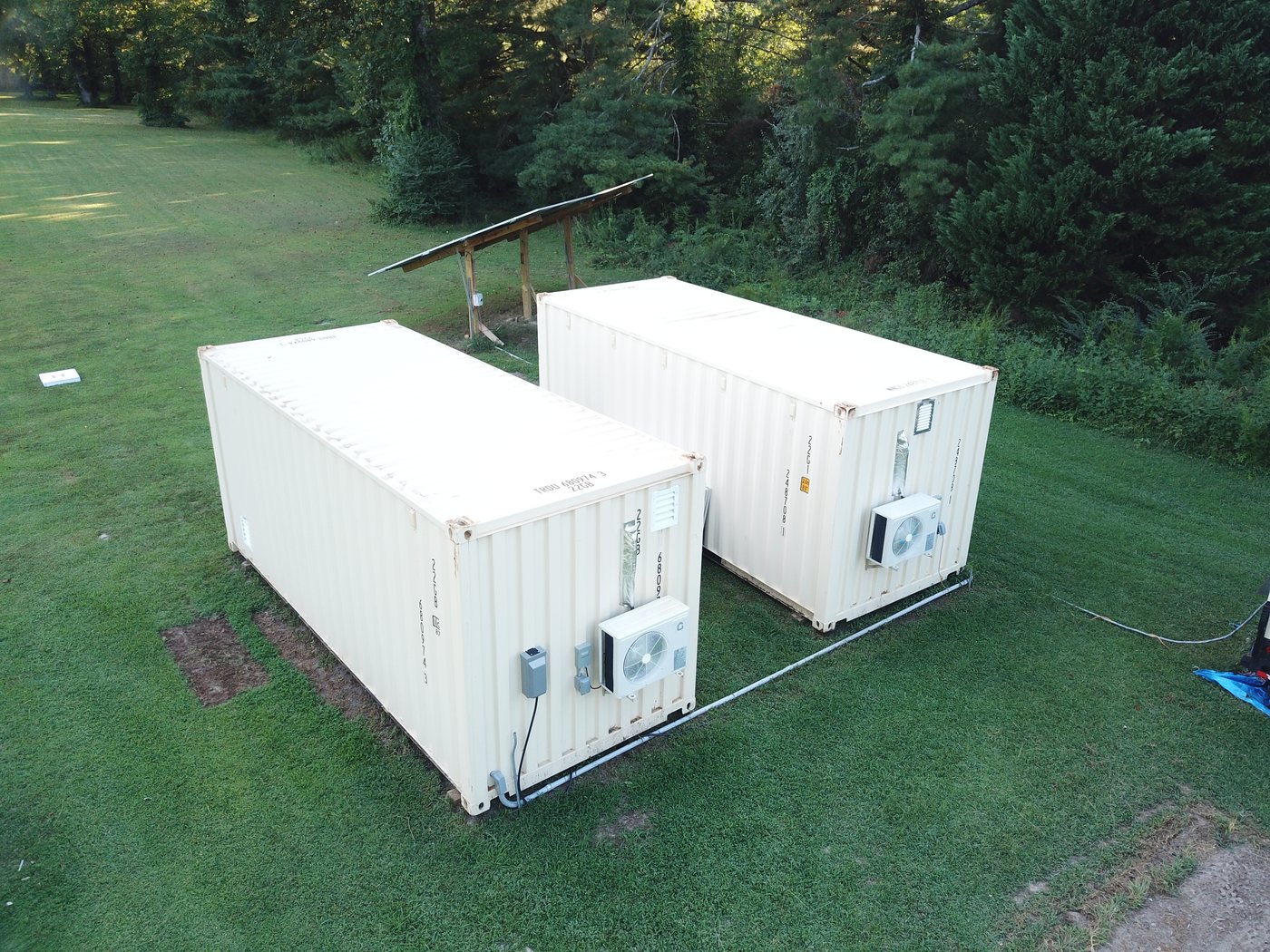
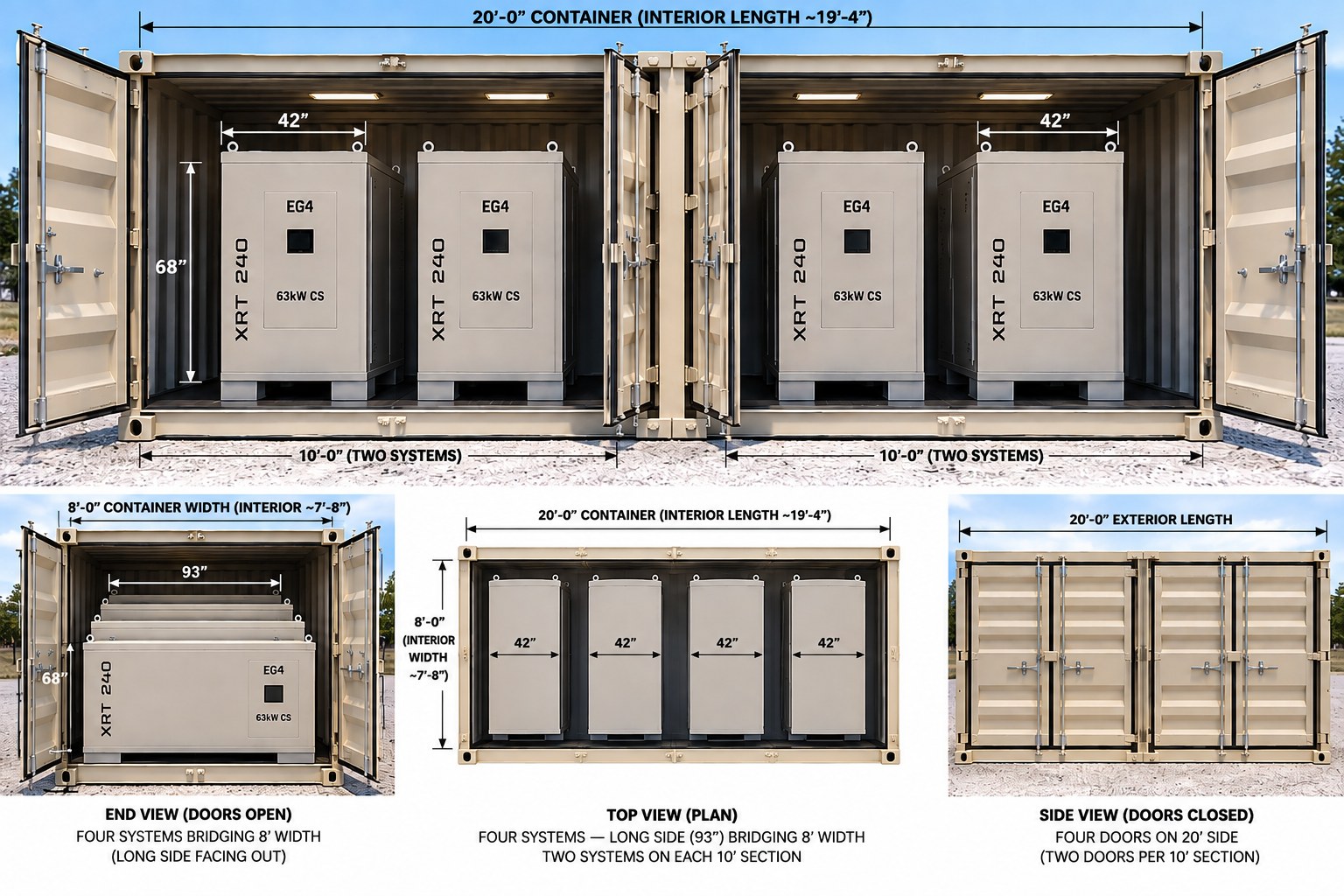
Energy conversion, storage, and control live in a dedicated ISO steel container sited no less than 75 feet from the home — turning spatial separation itself into the primary fire-safety strategy.


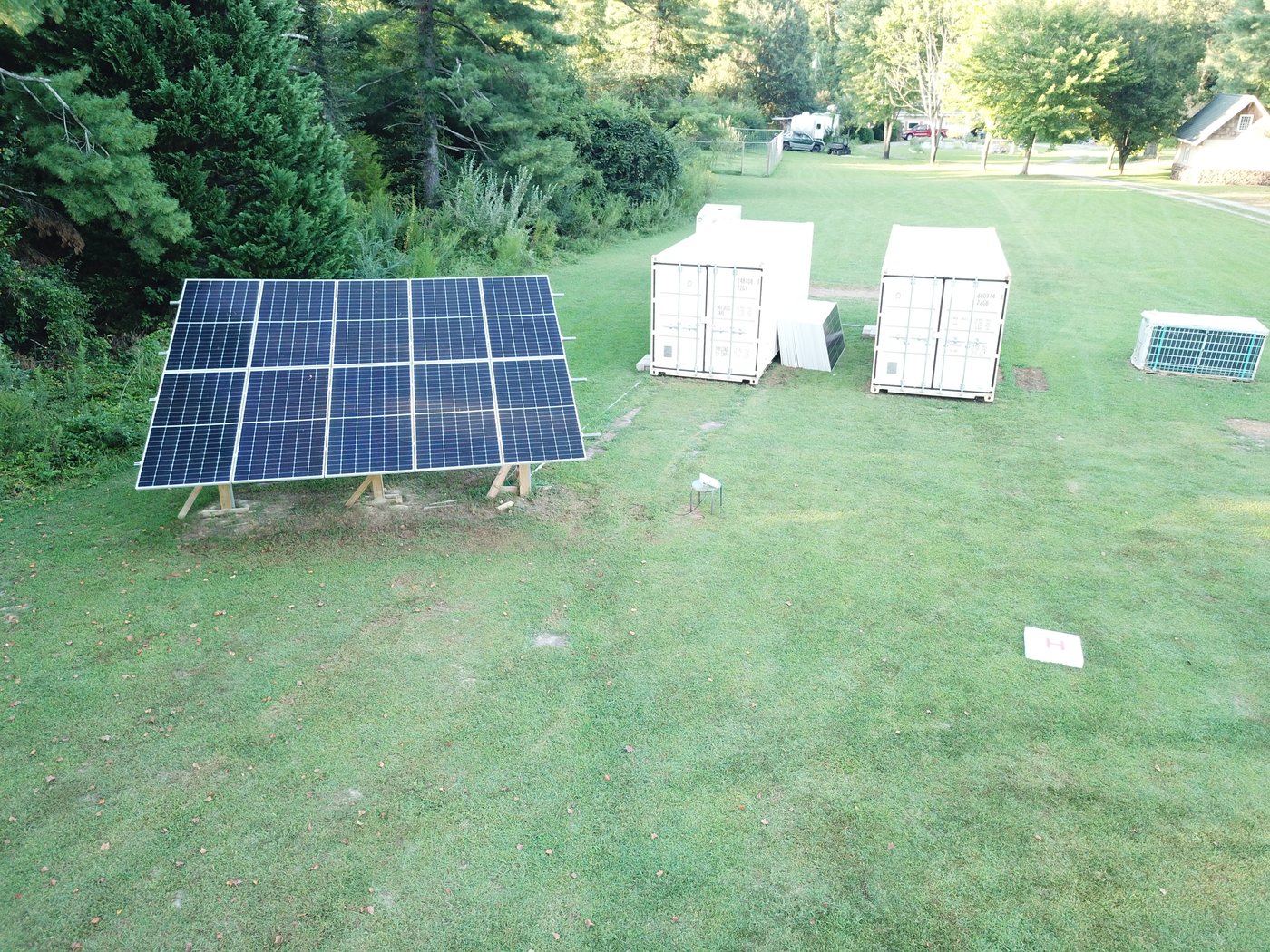
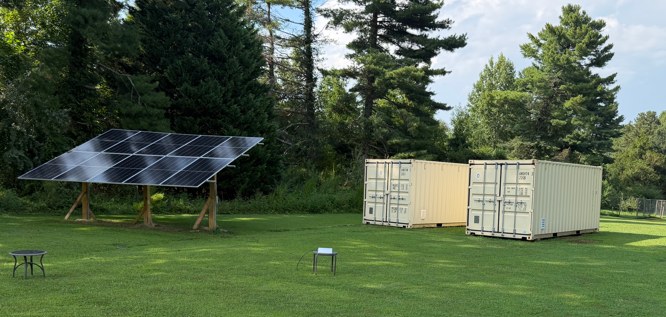
Eclipse Prototype 1 stands at the Gloucester proving ground with an EG4 48 kWh system installed and under test. The full build-out design is 192 kWh — the interface hardware is sized for it from day one.TRL 6 — Stage 1 declared Aug 2026 · Stage 2 evidence Sep 2026


Each container is its own baselined system — defined, separated, and removable without disturbing the rest. Hazards stay isolated; functions stay focused.
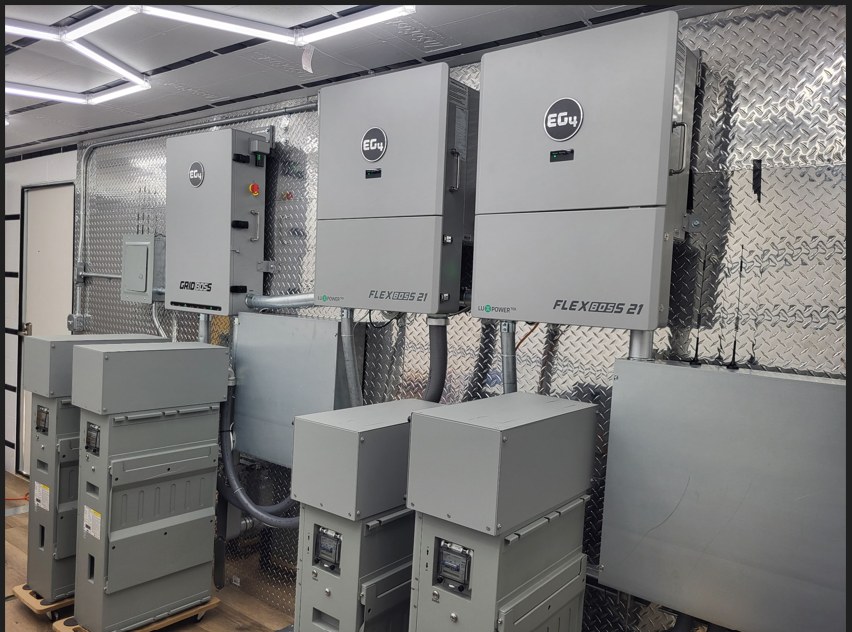
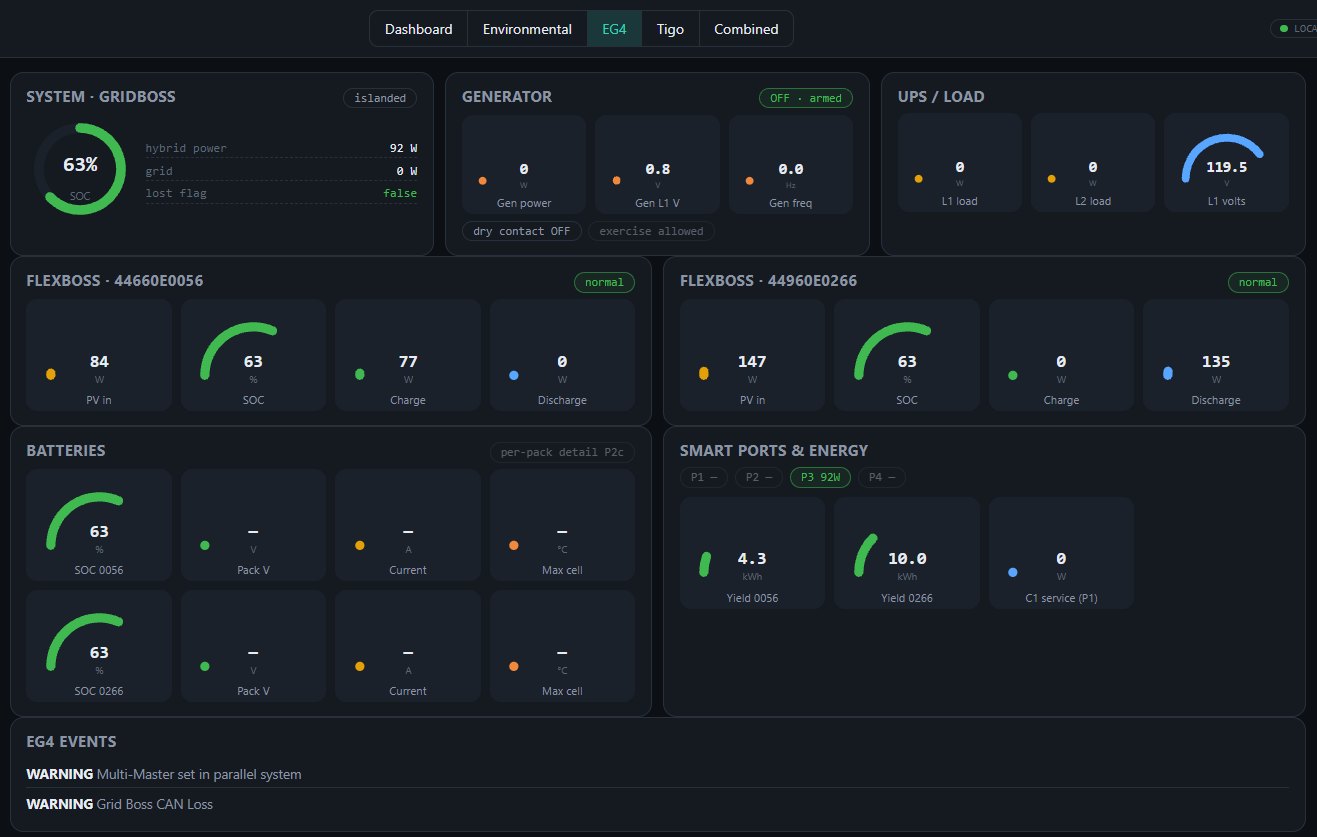
ZNShine 550W bifacial modules with Tigo TS4-A-O optimization land directly on EG4 FlexBOSS21 hybrid inverters behind an EG4 GridBOSS 200A head-end, backed by EG4 WallMount lithium storage.
A physically separate generator container provides fuel-based backup for extended outages, integrated into the microgrid through the head-end and monitored over an industrial, temperature-rated gateway.
A closed-loop vertical borefield drives a water-to-air heat pump tied into the home's HVAC distribution — quiet, efficient heating and cooling housed in its own conditioned container.
Pool chemicals and corrosive equipment are sealed in a dedicated, non-combustible container with integrated spill containment — completely segregated from every electrical and mechanical system.
The Eclipse Infrastructure Monitoring and Management System — the squared 2 is no accident. EIM²S doesn't just watch the grid; it manages it.
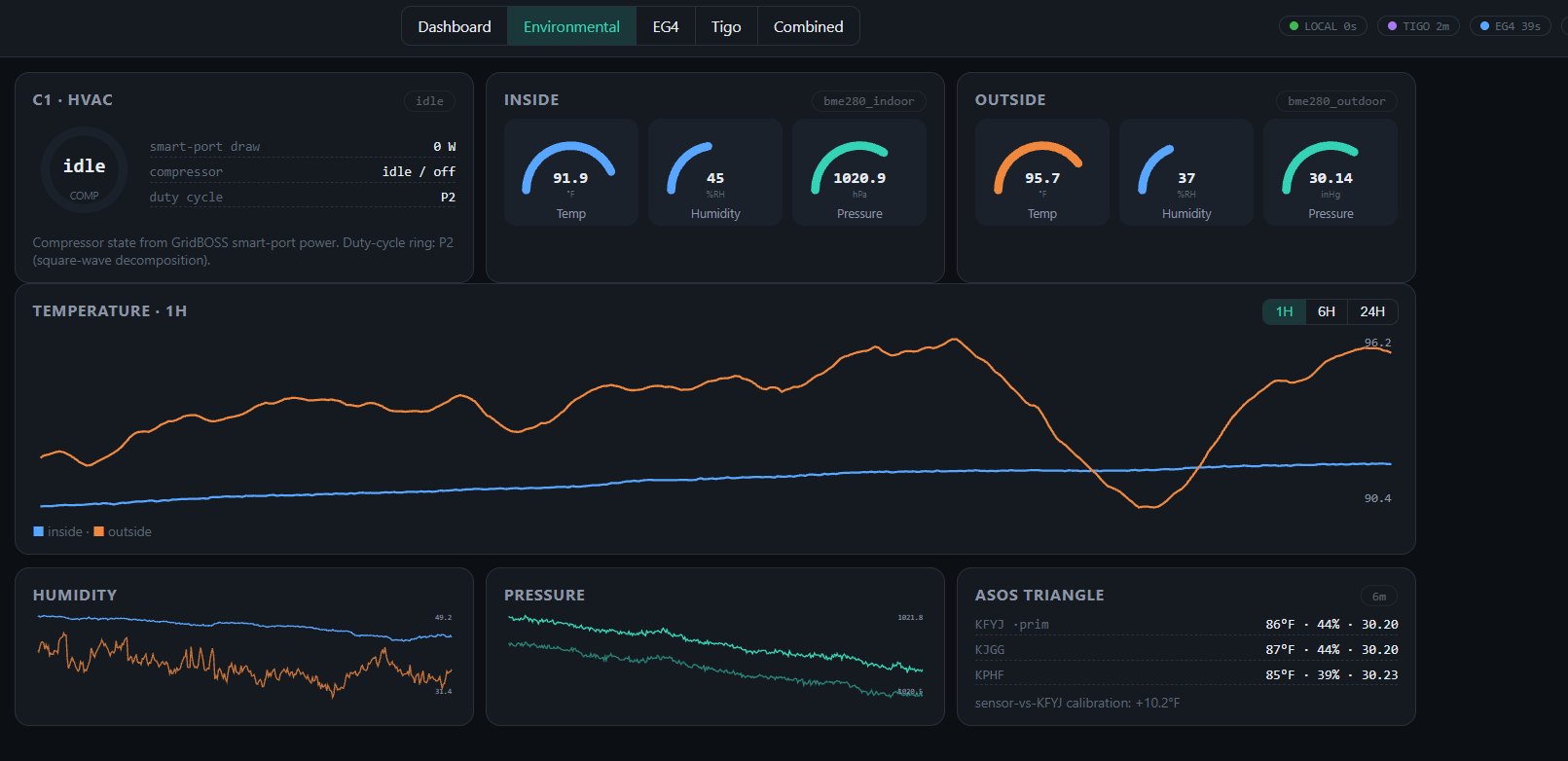
It unifies solar, storage, generator, geothermal, pool, environmental sensors, and cameras into a single operational view — with nothing leaving the property. Sensor data is acquired locally, persisted on-site, and evaluated against per-container safety envelopes in real time.
Remote oversight runs over a private encrypted overlay, so the system is reachable from anywhere without ever being exposed to the public internet.
The same interface — whether the container is in your backyard or on the far side of the world. Local-first on site, reachable anywhere over an encrypted overlay.
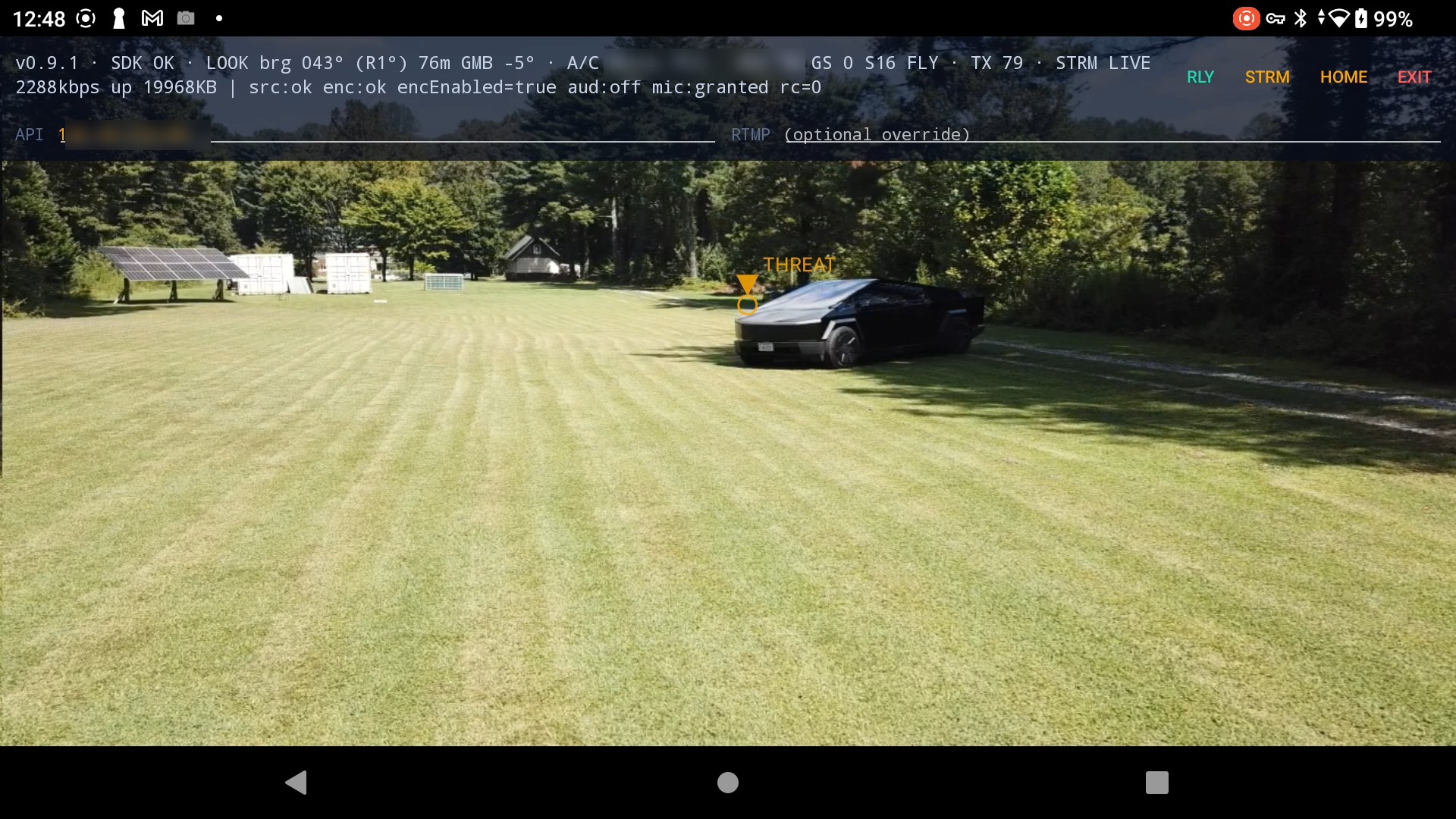
An add-on that pairs the EIM²S performance engine with automated aerial inspection — specify it into a new build or retrofit it onto an array already in the ground.
EIM²S watches every panel at the module level and, the moment one starts to slip, triggers a drone inspection to find out why — localizing the fault before it spreads across the string. It’s a self-contained reliability capability that drops onto government or commercial solar and microgrid assets, not just Eclipse’s own.
Module-level electrical data, normalized against on-site irradiance, flags an underperforming panel the instant it drifts from expected — not weeks later on a utility bill.
→A visual and thermal pass over the array pinpoints the physical cause — hot spots, micro-cracks, failed bypass diodes, soiling, shading, or connector heating — down to the individual module.
→The finding becomes a targeted work order, the repair is verified by a follow-up pass, and the loop closes — driving toward the highest achievable availability and reliability.
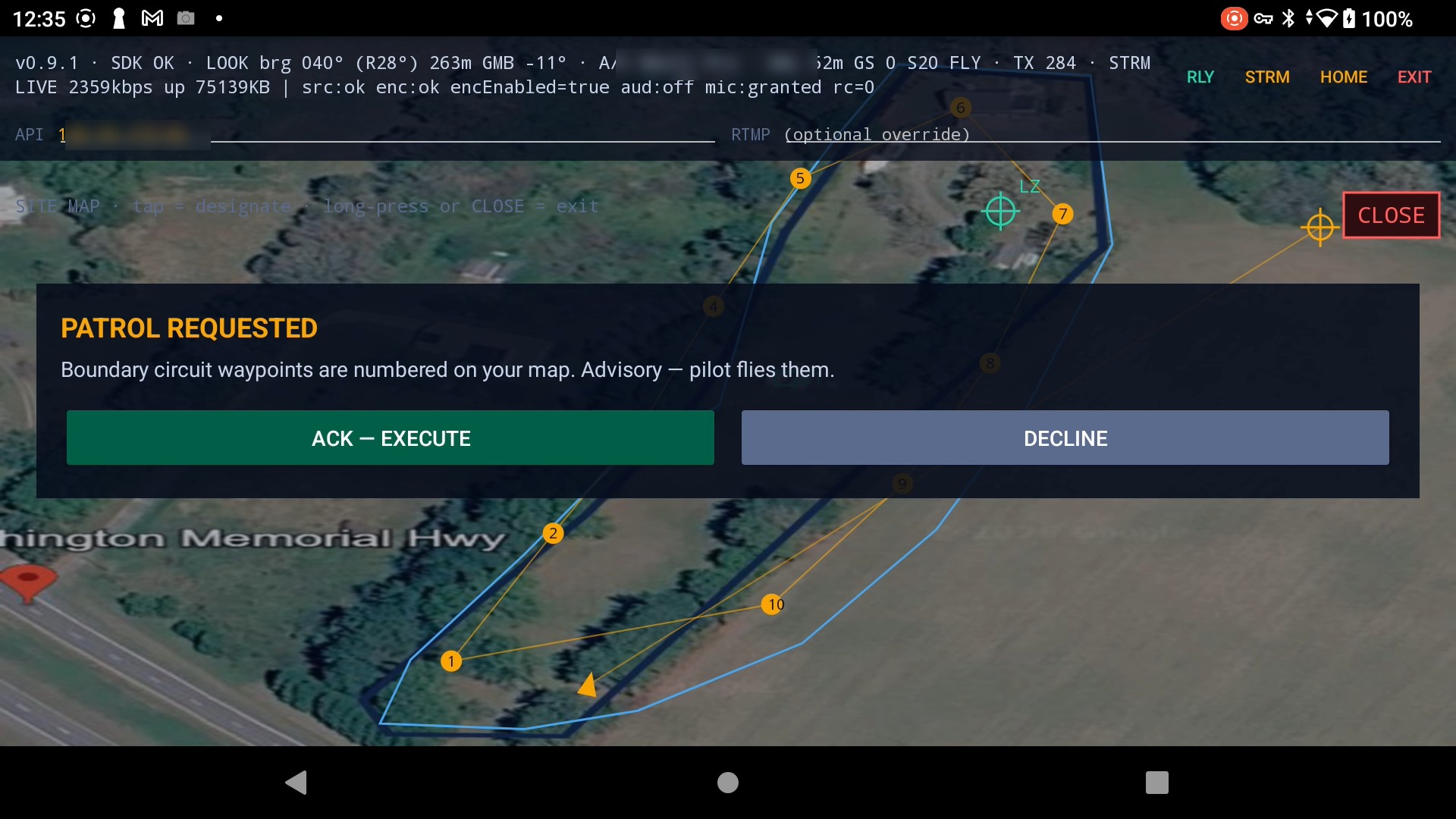
In a live proof-of-concept, an operator in the United Kingdom tasked an aircraft over the Gloucester proving ground — more than 3,000 miles away — to survey the site and flag anomalies, with encrypted live video streamed back in real time. A local safety pilot held flight authority throughout: the remote operator requests a survey, the on-site pilot acknowledges and flies it.
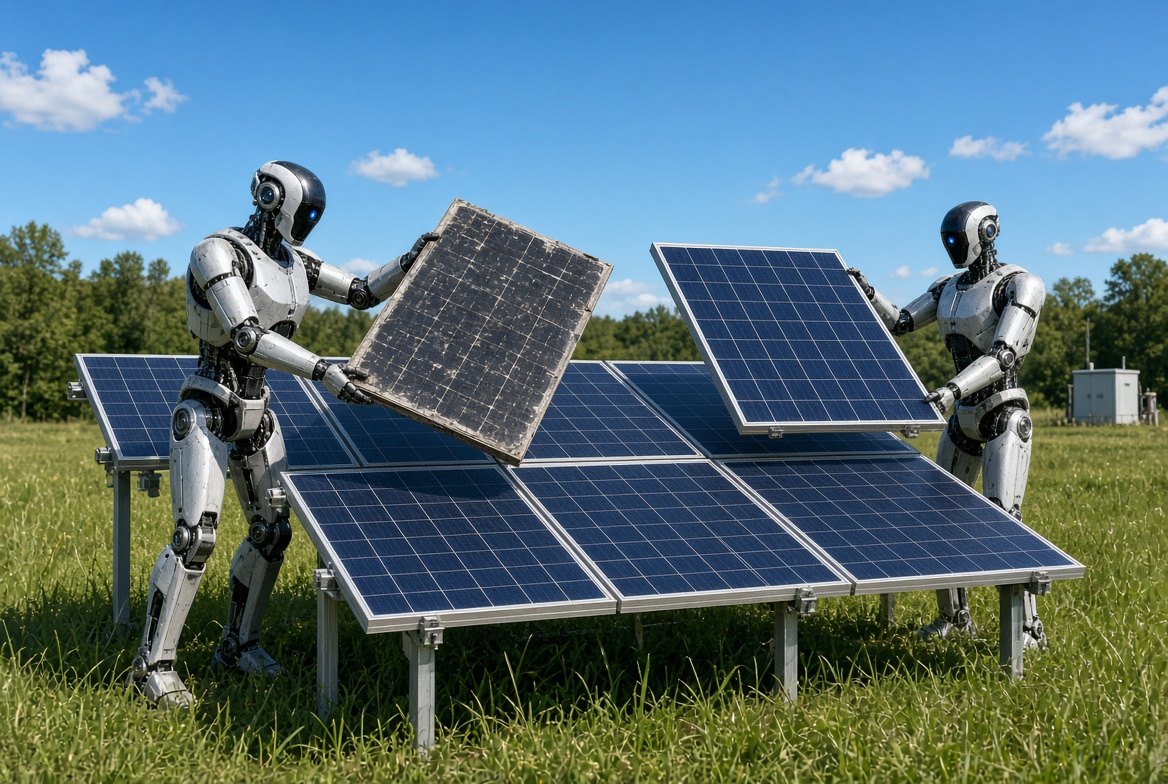
On the roadmap: AI agents that launch the aircraft and detect faults on their own, and on-site robotics that carry out the repair — extending the loop from detect and diagnose all the way to autonomous fix.


Three tiers, one architecture. Tiers price the EIM²S monitoring, networking and high-availability layer. Solar, storage and generator hardware and installation are scoped and quoted separately for each site.
The residential build is also a reference implementation for EclipseC — a commercial line engineered for the harshest places on earth.
At commercial scale the compute hardware is replaceable; the EIM²S software architecture is the durable, portable asset. Modular integrations, encrypted remote operability, high-availability failover, and on-site archival all port forward to industrial-grade hardware without a rewrite.
* Vendor substitution doesn't break the model.
Sustained extreme heat, abrasive dust, and arid conditions that punish conventional power electronics.
Corrosive salt fog, relentless humidity, and typhoon-grade wind loading on every exposed surface.
info@eclipsepower.net · Newport News, Virginia